
How Editura Gama Strengthened Market Presence Through Brand and Experience Design
Printing House · Iași, Romania · 50-100 Employees · 2025
At a time when children’s publishing is becoming increasingly competitive and product formats are rapidly replicated, Editura Gama undertook a strategic transformation to reinforce its market position. By redefining its brand identity and activating it through a structured marketing strategy, the company strengthened its connection with young readers and created a more coherent, recognisable presence across its market.
Reinforcing literacy through engagement-led publishing
Editura Gama is a Romanian children’s publishing house with a clear mission: to improve literacy rates by building a positive relationship between children and reading.
With over 30 years of experience, the company has developed a strong reputation in activity-based books, designed to combine learning with interaction. These formats encourage sustained engagement, positioning reading not as obligation, but as exploration.
However, as competitors began to replicate similar product formats, differentiation became less about the product itself and more about how the brand was perceived and experienced.
While Gama had recently introduced a modernised logo, the broader brand lacked alignment. There were no defined guidelines, no unified expression across channels, and no clearly articulated positioning to support long-term recognisability.
This created a structural gap between product quality and brand perception.
Establishing a unified and distinctive brand identity
The transformation began with defining the brand at a foundational level.
Rather than focusing solely on visual alignment, the work centred on clarifying Gama’s identity as an organisation that connects education with enjoyment. The objective was to position the brand not just as a publisher, but as a contributor to how children experience learning.
This direction informed the development of a cohesive visual and verbal system.
A structured colour palette anchored the brand in its existing recognisability while expanding its expressive range. A signature green provided continuity, complemented by deeper tones to introduce balance and lighter colours to reinforce creativity and playfulness.
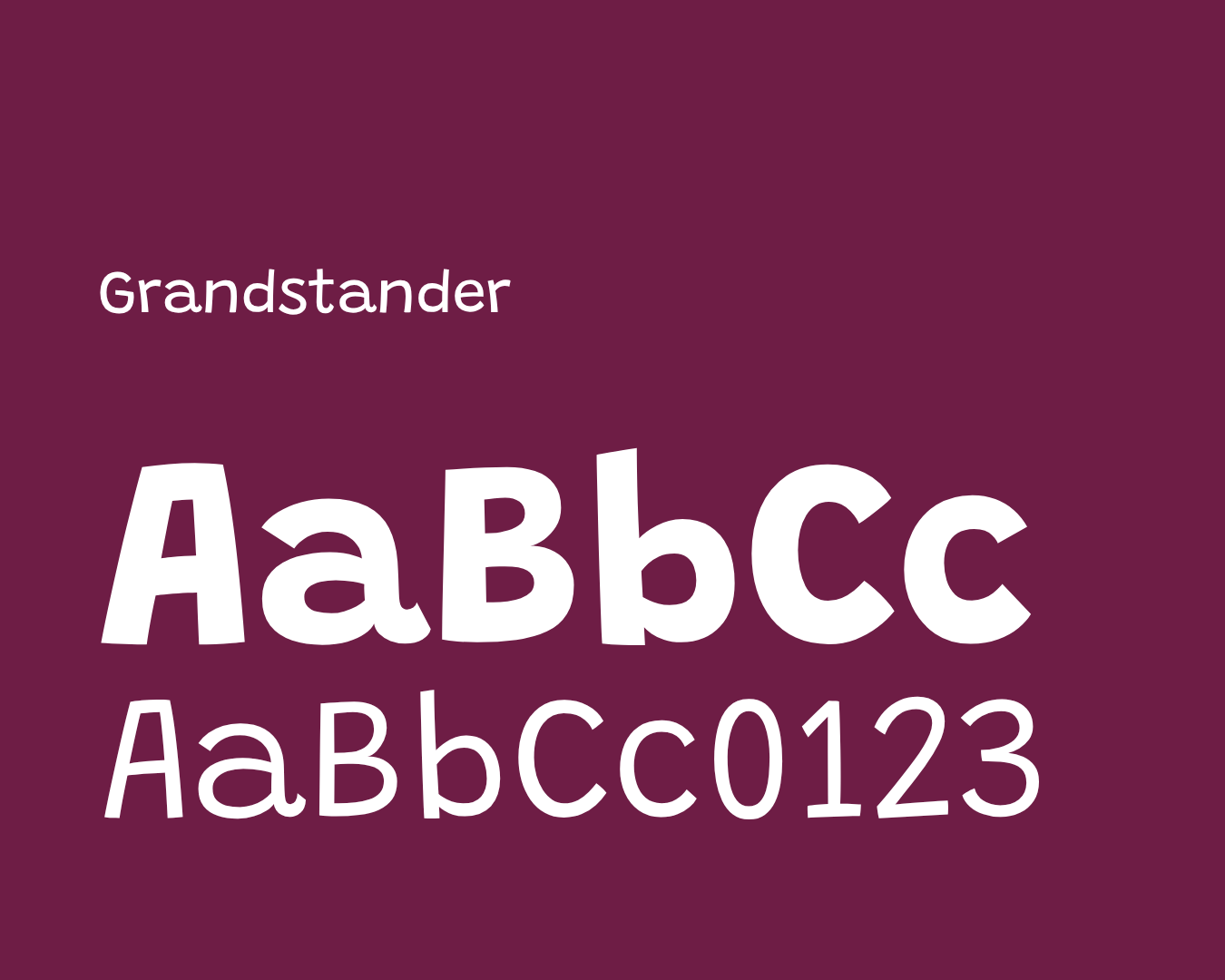
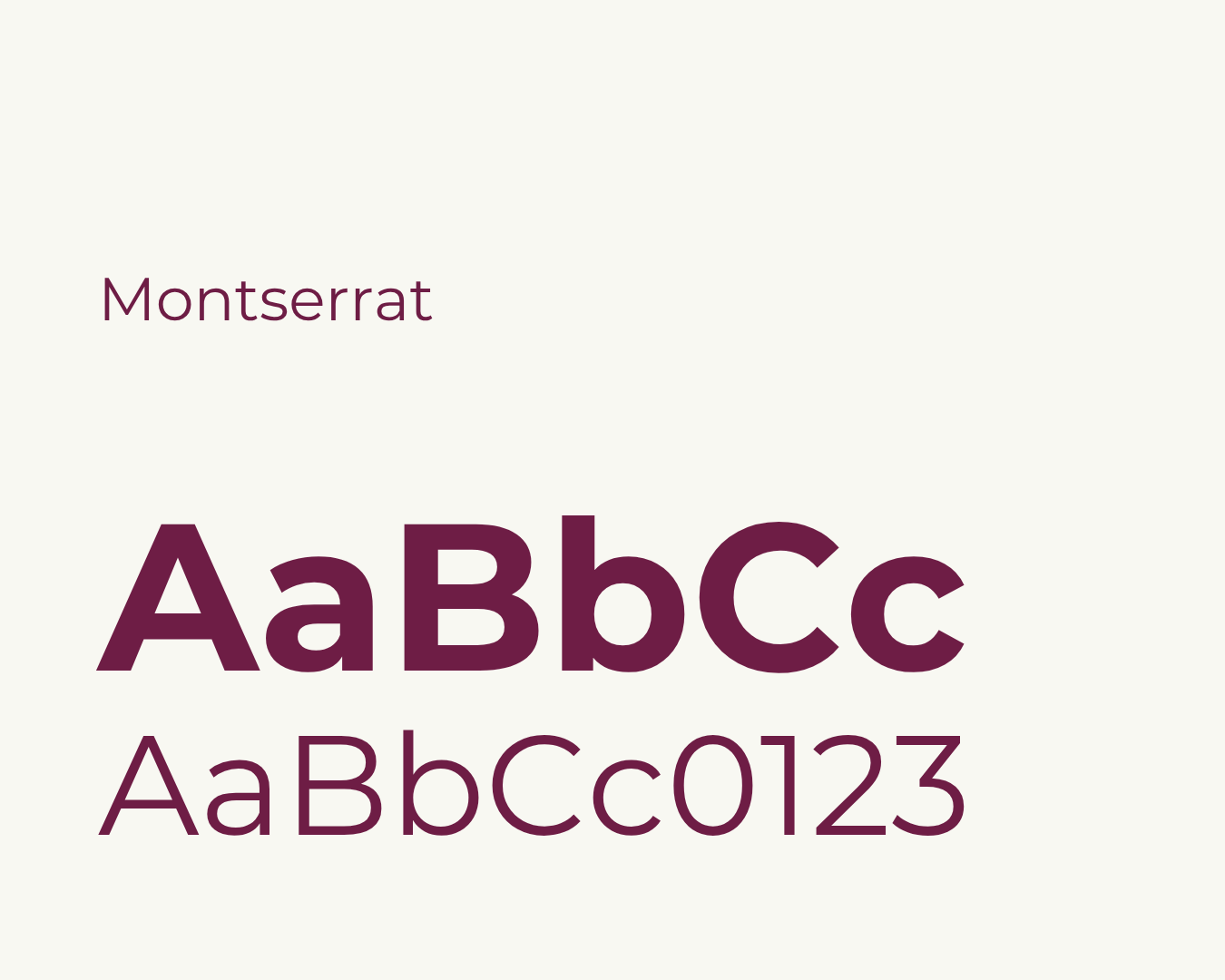
Typography was selected to reflect the same balance, combining expressiveness with clarity to ensure accessibility across audiences.
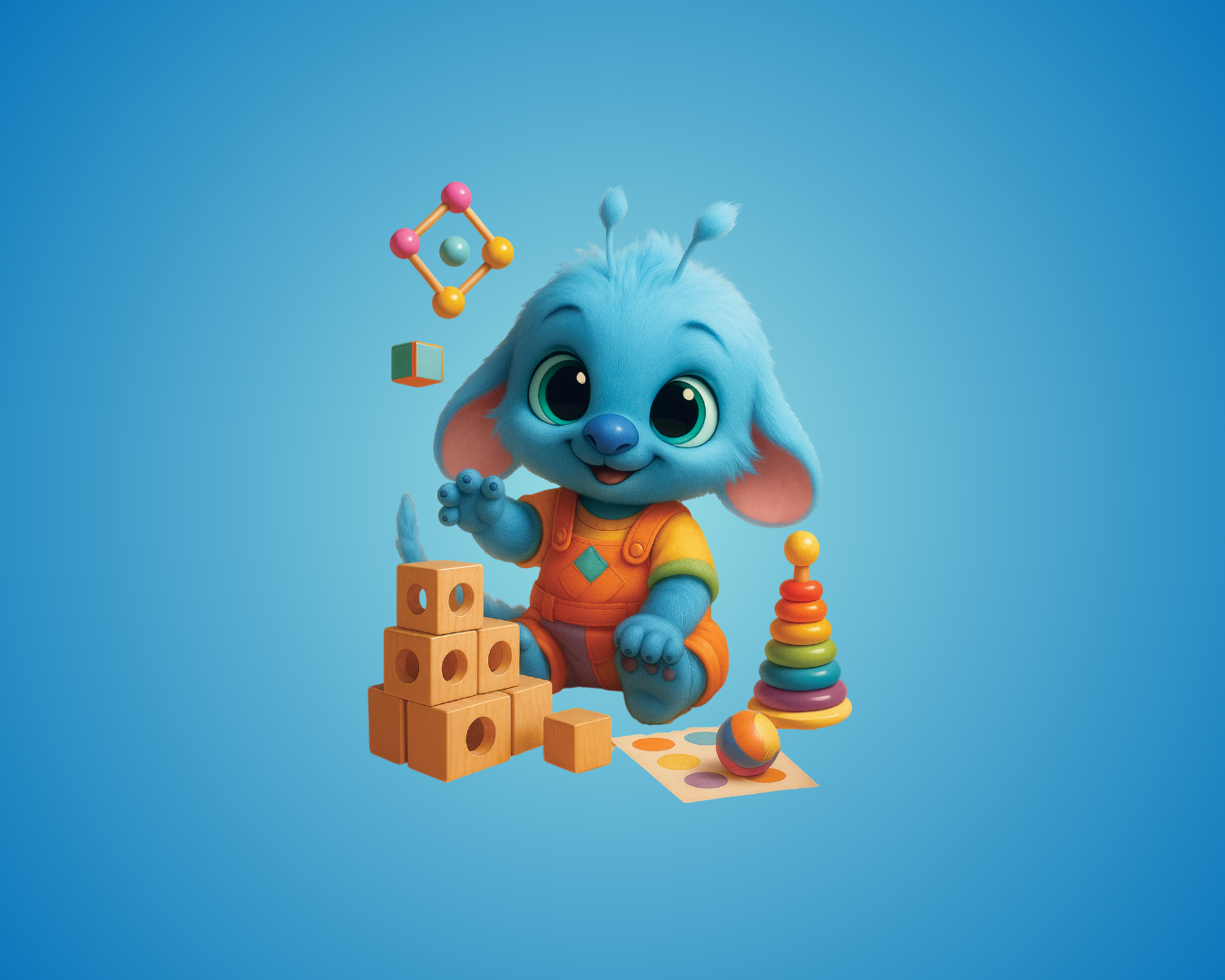
A defining addition was the introduction of brand characters.
Each character was linked to a specific book genre, creating a system that extended beyond individual titles. This allowed the brand to build familiarity over time, giving children consistent reference points across different products while introducing a narrative layer to the overall experience.
These elements were formalised into a clear set of brand guidelines, enabling consistency across all future communications and materials.



Translating identity into a consistent digital experience
To ensure the brand was experienced consistently, the identity system was applied to a proposed redesign of Gama’s website.
The focus was on aligning visual design, tone, and structure into a single coherent experience. Rather than relying on internal assumptions, two homepage variants were developed and tested through A/B experimentation to understand which direction resonated more effectively with the audience.
This approach introduced a more evidence-based decision process, ensuring that design choices reflected user response rather than preference.
The outcome was a more unified and engaging digital presence, where each element reinforced the same underlying narrative.
Early feedback highlighted the strength of the newly introduced characters, which quickly became a focal point of engagement among young readers.
Building a market-aligned growth strategy
With a clear identity in place, the next phase focused on translating positioning into market impact.
A structured analysis was conducted across the Romanian children’s publishing market, alongside a review of broader European trends. This provided a view of both current competitive dynamics and emerging patterns shaping the category.
By aligning these insights with Gama’s existing performance data, a targeted growth strategy was developed, centred on increasing market share within a defined timeframe.
The strategy extended beyond short-term initiatives, outlining:
Defined customer journeys across key segments
Priority marketing channels aligned with audience behaviour
A longer-term roadmap for brand development
The emphasis was on continuity, ensuring that each activity contributed to a consistent and cumulative market presence.
Activating the strategy through a seasonal campaign
The summer period provided a natural opportunity to activate the newly defined positioning.
During school holidays, the challenge for educational brands is maintaining engagement without replicating the structure of formal learning. The objective was to position Gama’s activity books as an engaging alternative rather than a continuation of schoolwork.
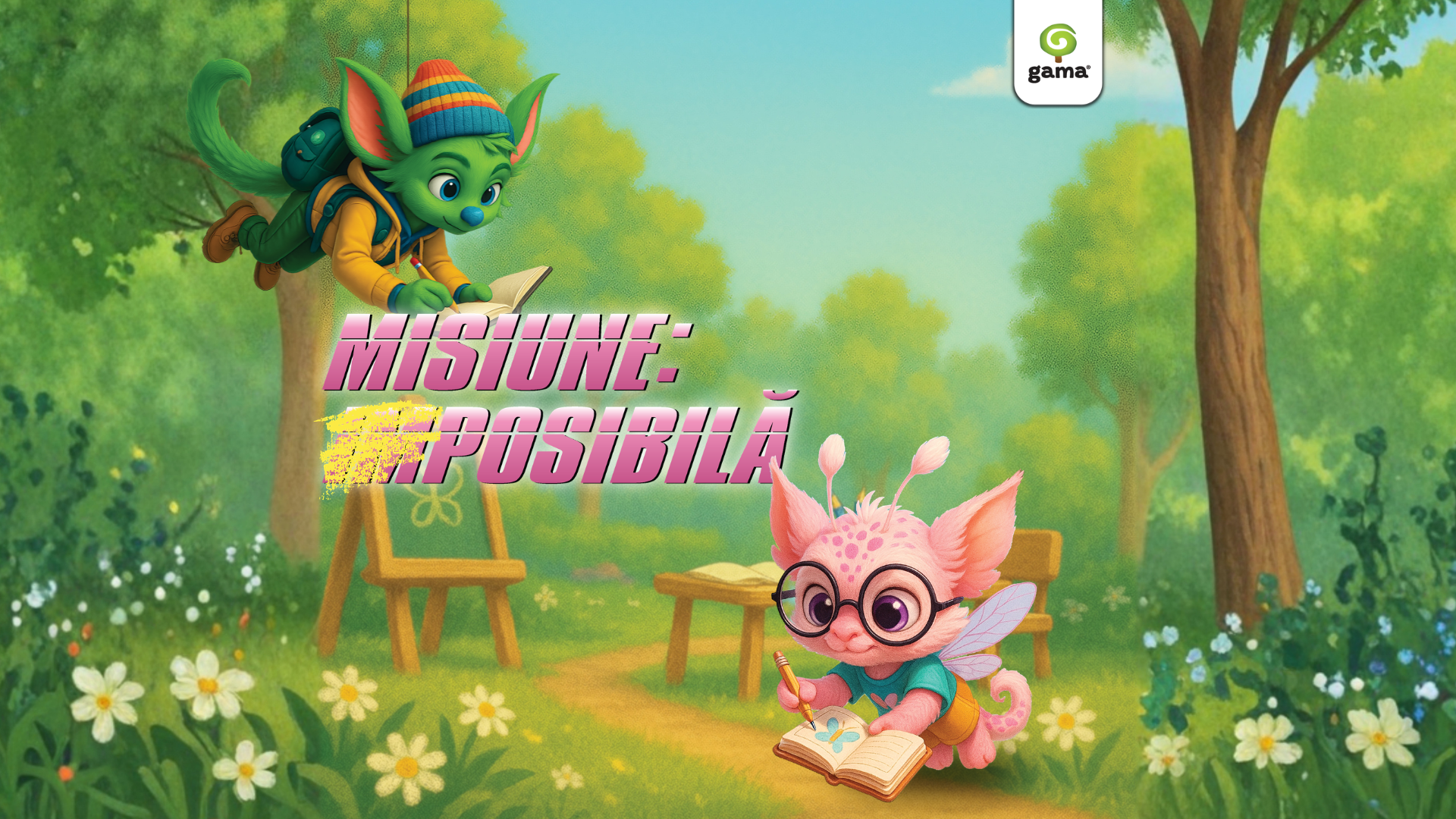
At the same time, the campaign needed to introduce the newly developed brand characters to the audience in a meaningful way.
The concept, “Misiune Posibilă,” was built on a culturally familiar expression, strengthened by its timing. The release of a new Mission: Impossible film during that period had already brought the phrase into wider public attention, particularly among younger audiences. Adapting it into a localised and accessible format allowed the campaign to tap into an existing cultural moment, reducing the need for explanation while creating a framework that felt immediately relevant and engaging.
Designing participation-driven engagement
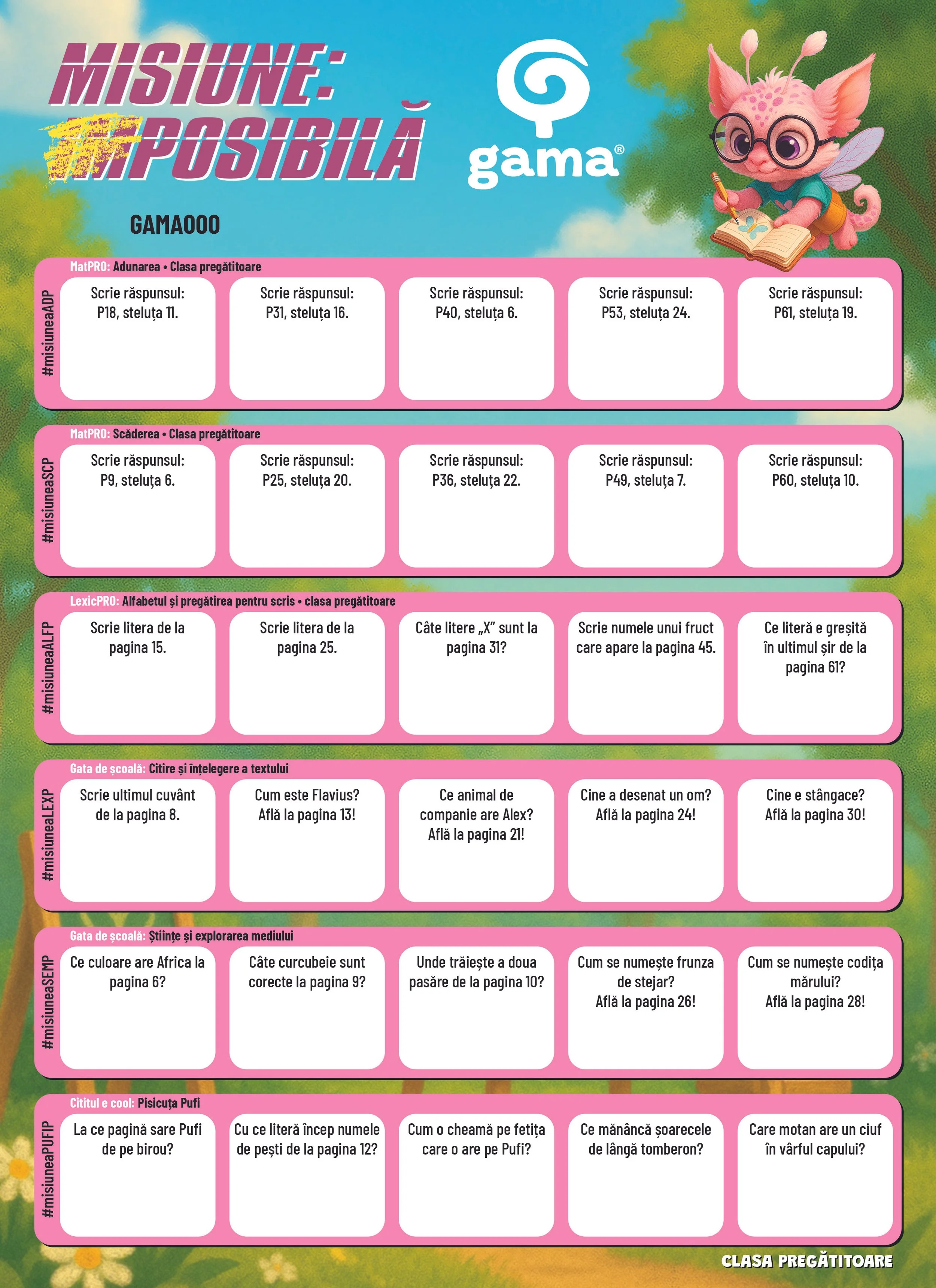
The campaign centred on a bingo-based system designed to encourage ongoing interaction.
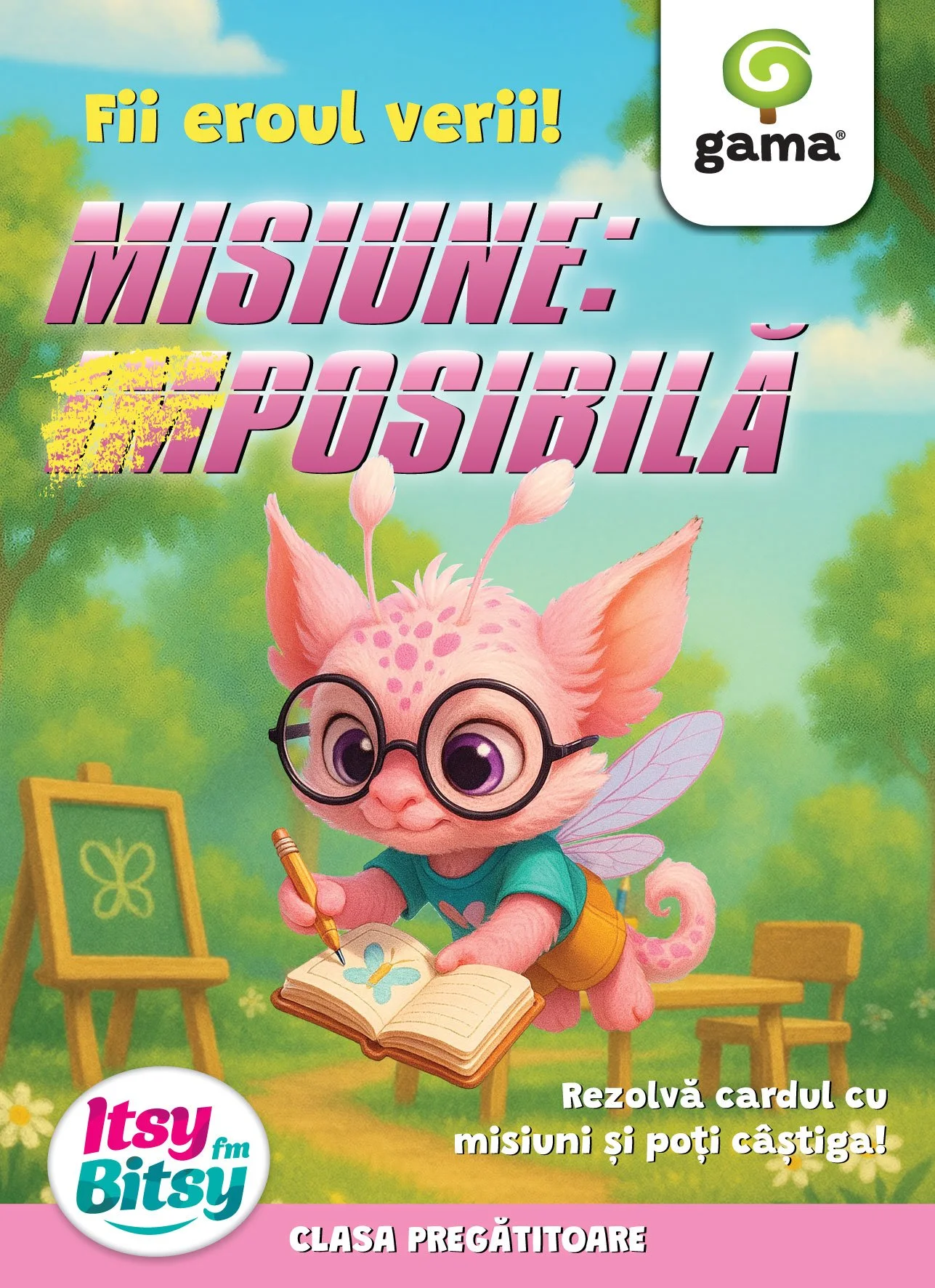
Each activity book was paired with a bingo card containing daily missions linked to the book’s content. Progression was structured but flexible, allowing children to engage at their own pace while maintaining a sense of achievement.
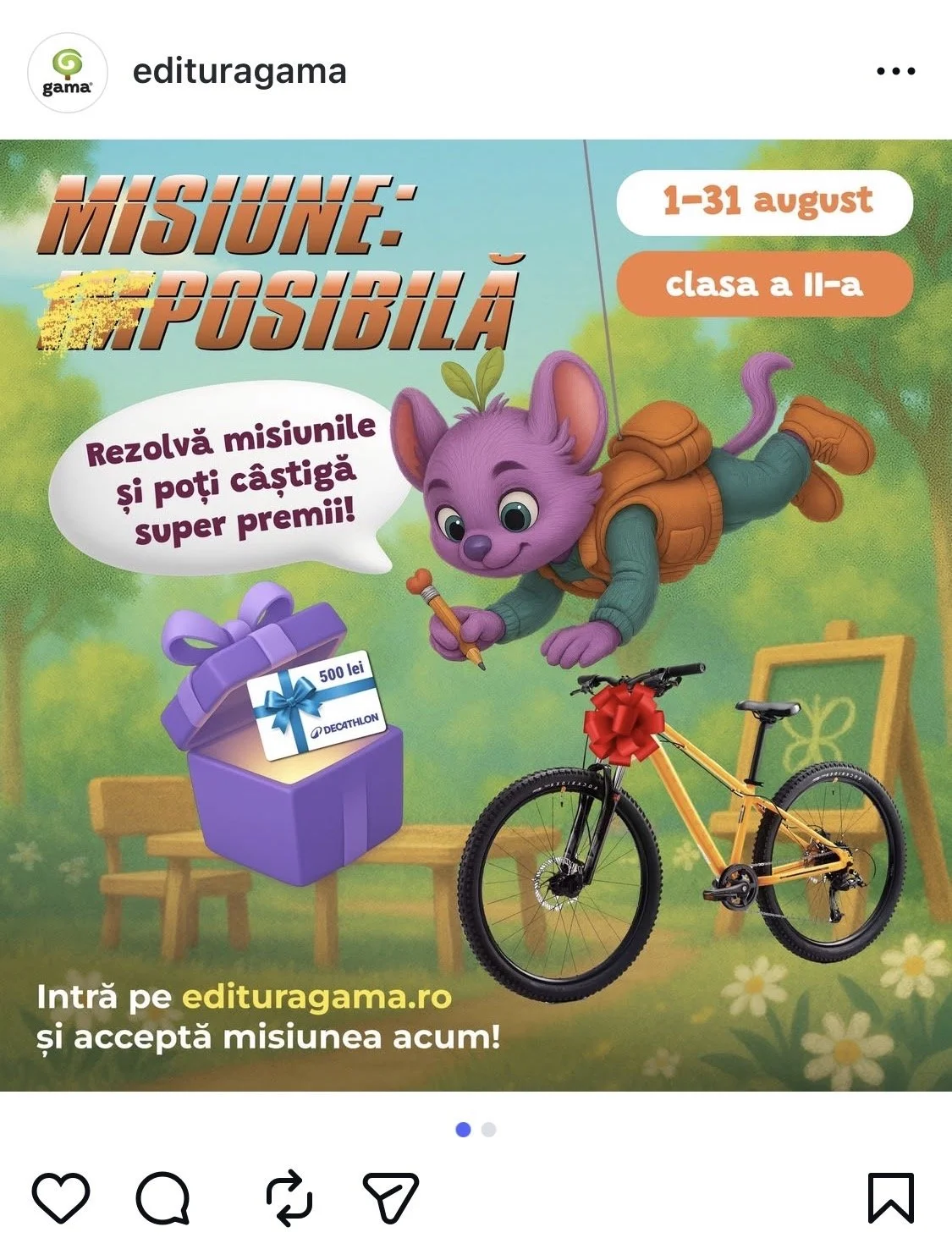
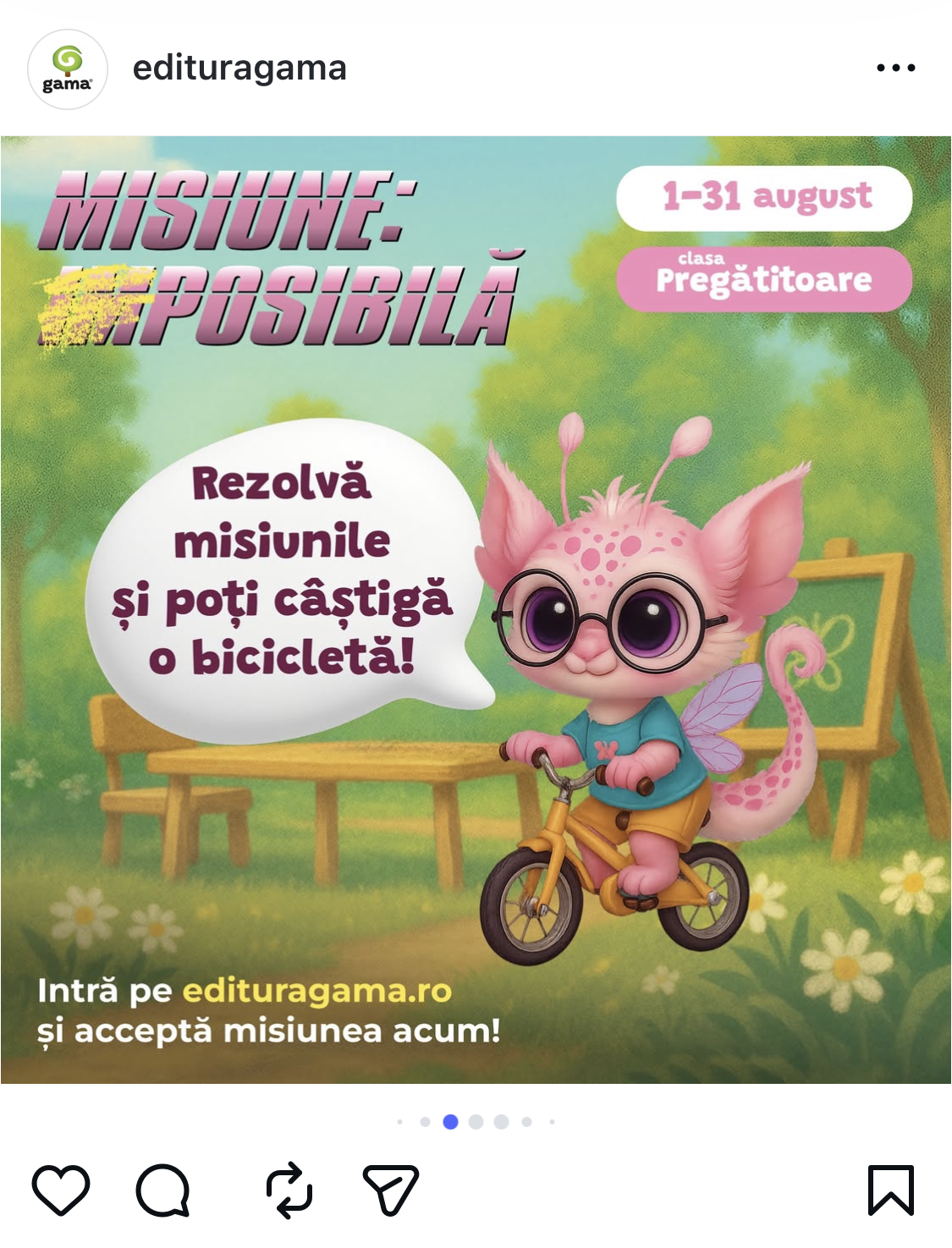
Completion of specific milestones introduced incremental rewards, while social sharing enabled participation to extend beyond the individual household.
This approach reframed learning activities as missions, shifting the experience from obligation to exploration.
Embedding narrative through brand characters
The introduction of brand characters played a central role in shaping the campaign experience.
Rather than functioning as visual additions, the characters acted as guides, connecting individual tasks into a broader narrative. This created continuity across activities and strengthened the relationship between the brand and its audience.
For many participants, this was the first interaction with the characters. Their integration into the campaign provided both visibility and context, allowing them to become recognisable elements of the brand.
Ensuring consistency across execution
To maintain alignment, a clear creative direction was developed, outlining how visual identity, tone, and character usage should be applied across all campaign touchpoints.
This enabled Gama’s internal team to execute materials consistently, ensuring that the campaign reflected the broader brand system.
The campaign was deployed across digital platforms, including the website and social media channels, while the bingo card served as a physical extension of the experience within the home.
This combination of digital and tangible elements reinforced engagement across different contexts.
Strengthening engagement and extending momentum
While formal performance metrics were not the primary focus, several indicators demonstrated the campaign’s effectiveness.
Audience response highlighted strong engagement with both the concept and the characters. Participation extended across digital channels, and the campaign generated sufficient momentum to continue beyond its initial timeframe.
Following the summer period, “Misiune Posibilă” was extended into a back-to-school campaign, reflecting its adaptability and resonance with the audience.
Creating alignment as a foundation for growth
The Editura Gama project illustrates the impact of aligning identity, strategy, and execution within a single coherent framework.
The transformation did not change the core offering. Instead, it clarified how that offering is understood, experienced, and communicated.
By establishing a unified identity, grounding decisions in market insight, and translating strategy into engaging experiences, Gama strengthened its position within an increasingly competitive category.
As markets continue to evolve, the ability to maintain this alignment becomes a defining factor in sustaining long-term differentiation.
Explore More Success Stories
Printco
The Cruc-ible Lens
Discover our collection of articles and thought pieces to uncover insights and industry tips in Leadership, Marketing, Business Strategy and Transformation.